
Across the country, countless dogs struggle with issues that have become almost normalized: constant itching, recurring ear problems, digestive upset, dull coats, joint stiffness, and low energy.
Many pet parents do everything they’re told — switching shampoos, trying supplements, changing proteins, visiting the vet again and again — yet the issues persist.
Often, the missing piece isn’t the dog.
It’s what’s in the bowl.
Symptoms Are Signals — Not Random Flukes
When the same patterns show up repeatedly in dogs of all breeds and ages, it’s worth asking a bigger question: What do they all have in common?
For most modern dogs, the answer is diet.
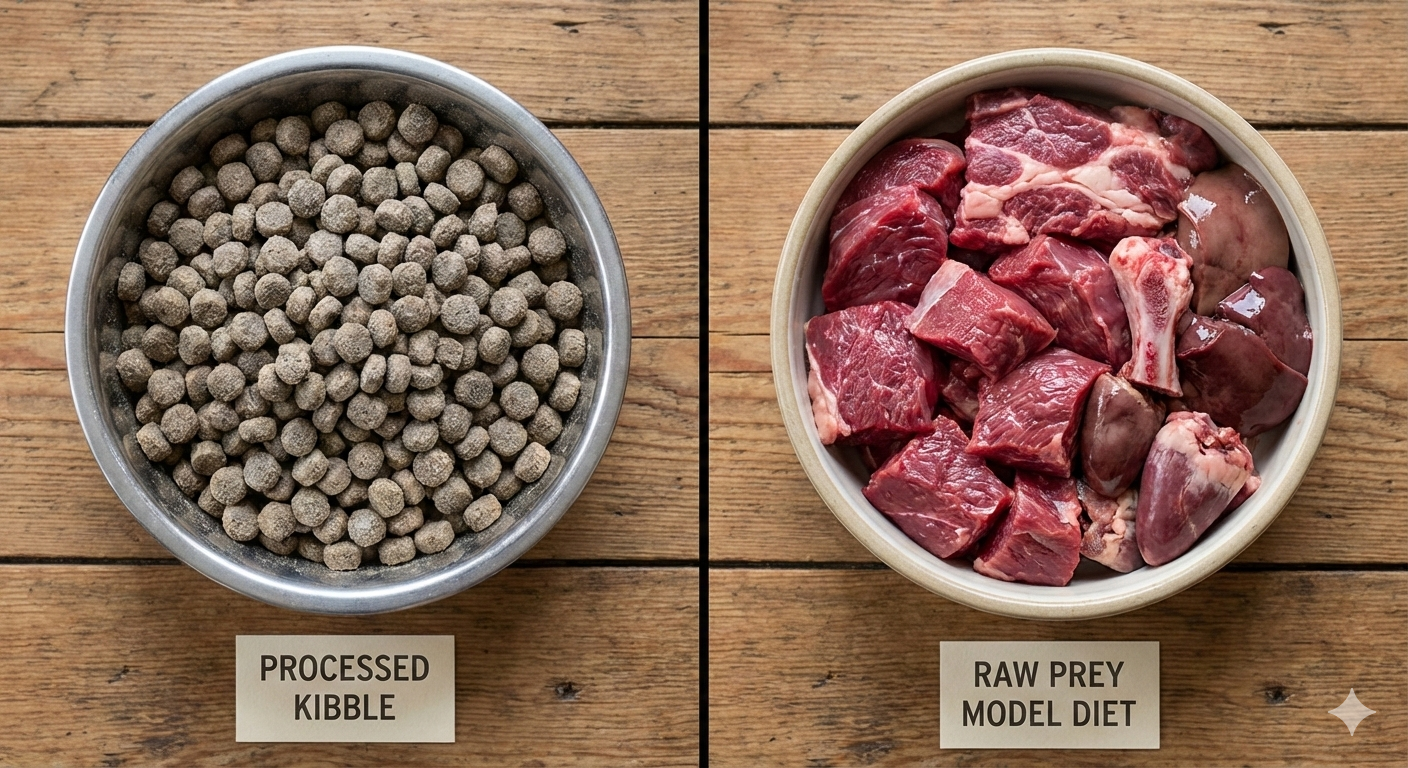
Highly processed foods can place stress on the body over time, especially when they’re:
-
Heavy in refined carbohydrates
-
High in industrially processed fats
-
Dependent on synthetic nutrients
-
Manufactured using extreme heat
These factors don’t always cause immediate problems — but they can quietly affect digestion, skin health, immune balance, and metabolism over the long term.
Processing Changes How the Body Responds to Food
Food isn’t just calories. It’s information for the body.
When ingredients are heavily processed, their natural structure changes. Proteins denature. Fats oxidize. Naturally occurring enzymes are lost. To compensate, nutrients are often added back in synthetic form.
While this may meet basic nutritional standards on paper, it doesn’t reflect how food exists in nature — or how a dog’s body evolved to use it.
The Inflammation Conversation
Inflammation isn’t a diagnosis — it’s a response.
The body uses inflammation as a defense mechanism, but when that response becomes constant, it can affect:
-
Skin and coat quality
-
Digestive comfort
-
Joint mobility
-
Energy levels
-
Immune resilience
Diet plays a major role in either supporting balance — or pushing the body toward chronic stress.
Highly refined carbohydrates, excessive omega-6 fats, and ultra-processed ingredients can all contribute to that imbalance when fed consistently over time.
Why “Healthy” Marketing Isn’t Always Honest Nutrition
Many pet foods are marketed with comforting language: natural, premium, balanced, complete.
But those words don’t tell you:
-
How the food was processed
-
Where the nutrients come from
-
How bioavailable those nutrients are
-
Whether the food supports a dog’s natural biology
This is why ingredient transparency matters more than ever.
Feeding the Dog — Not the Industry
At Ancestral Raw Nutrition, we believe dogs deserve food that makes sense for their biology, not food designed primarily for shelf life or mass production.
That means:
-
Using real, identifiable ingredients
-
Avoiding unnecessary fillers and binders
-
Minimizing processing whenever possible
-
Letting nutrients come from food — not synthetic packs
-
Formulating with ancestral, prey-based principles in mind
We don’t believe dogs need to be “fixed.”
We believe they need to be properly nourished.
When the Bowl Changes, Everything Can Change
Many pet parents are surprised to see improvements not because something was “wrong” with their dog — but because something finally started going right.
Better digestion.
Healthier skin.
More consistent energy.
Improved stool quality.
Greater overall resilience.
Not overnight miracles — but steady, meaningful changes that come from feeding with intention.
The Takeaway
Your dog’s body is constantly responding to what you feed.
When food is closer to nature, the body has less to fight against — and more to work with.
At Ancestral Raw Nutrition, we don’t chase trends or fear-based marketing.
We focus on real food, honest formulation, and respect for the animal.
Because the root cause is often simple:
It’s not the dog.
It’s the bowl.
Leave a comment
This site is protected by hCaptcha and the hCaptcha Privacy Policy and Terms of Service apply.