
Animal Fiber for Dogs: Why Hair & Feathers Matter in a Whole Prey Raw Diet
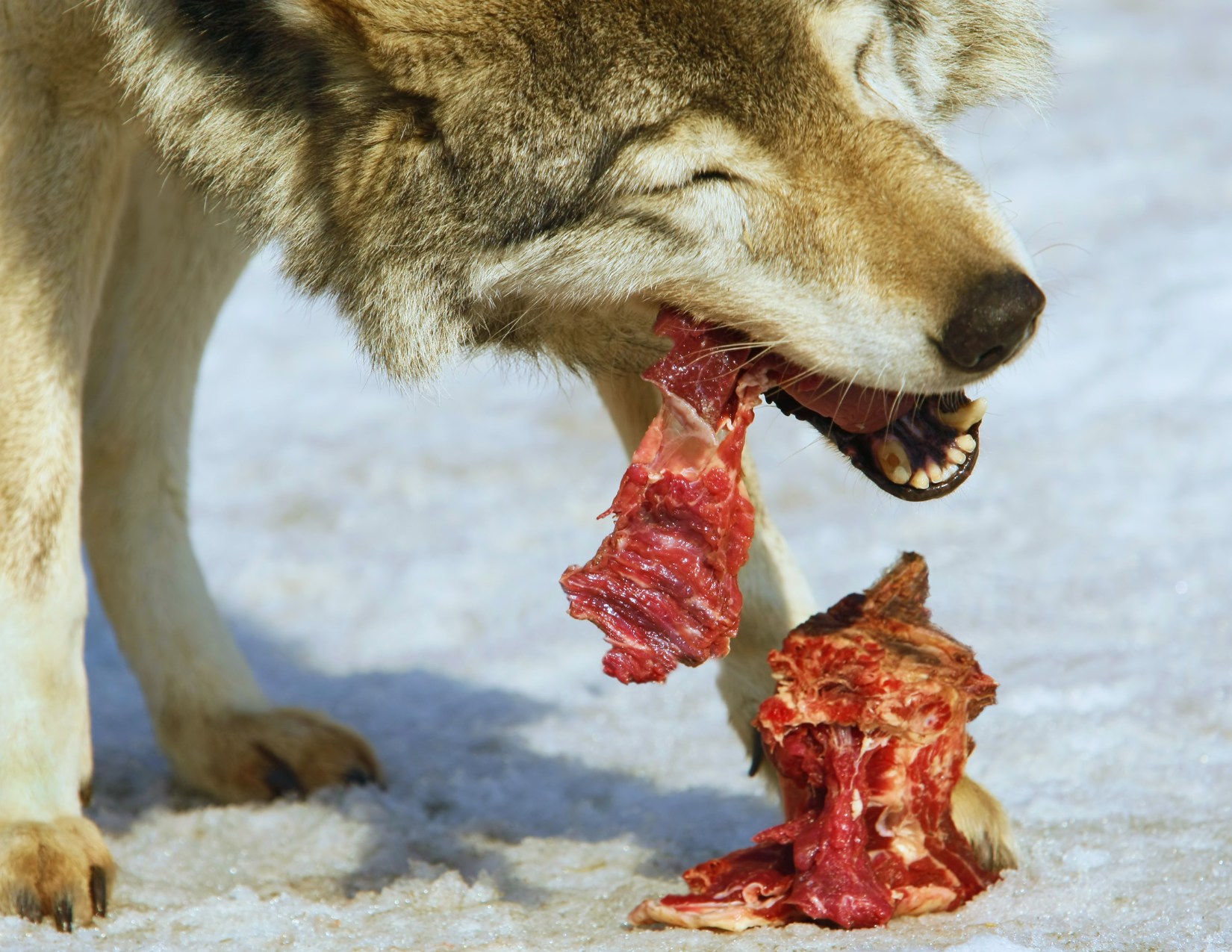
If you’ve ever wondered why wolves eat fur, or why wild cats don’t skin their prey, the answer reveals something missing in modern pet food.
At Ancestral Raw Nutrition®, we believe in feeding dogs and cats the way nature designed — muscle meat, organs, bone, and yes… hair and feathers.
Let’s break down why animal-based fiber may be one of the most overlooked components in raw feeding.
What Is Animal Fiber?
Animal fiber refers to fur, feathers, and hide consumed as part of whole prey.
Unlike plant fiber (beet pulp, pea fiber, cellulose), hair and feathers are primarily made of keratin — a structural protein that is largely indigestible.
In carnivores such as dogs (descended from Canis lupus) and cats (descended from Felis lybica), this keratin functions similarly to insoluble fiber.
But here’s the key difference:
It’s species-appropriate.
Why Do Wolves Eat Fur?
Wild wolves do not remove fur before eating prey. Scat analysis consistently shows high fur content in wild wolf populations.
That fur:
• Adds bulk to stool
• Stimulates natural intestinal movement
• Helps form firm, compact feces
• Supports mechanical digestion
This is not accidental ingestion — it is evolutionary design.
Hair & Feathers vs. Plant Fiber
Most commercial pet foods rely on plant-derived fiber such as:
• Beet pulp
• Pea fiber
• Cellulose
• Psyllium
These fibers ferment in the colon and can produce short-chain fatty acids. While useful in some clinical diets, they are not primary components of a wild carnivore diet.
Hair and feathers, on the other hand:
• Do not ferment heavily
• Do not add carbohydrate load
• Do not dilute animal protein
• Provide structural bulk without gas-producing fermentation
For raw-fed dogs and cats, this often translates to:
• Smaller stools
• Less odor
• Firmer consistency
Does Fur Kill Bacteria?
No.
Hair does not sterilize meat or eliminate pathogens.
However, carnivores evolved with:
• Highly acidic stomach environments
• Short digestive tracts
• Rapid transit times
These adaptations allow them to handle whole prey efficiently.
Animal fiber supports digestive mechanics, not sterilization.
Is Plant Fiber Bad for Dogs?
Not necessarily.
Plant fiber can be helpful in:
• Veterinary weight management formulas
• Temporary digestive support
• Certain clinical conditions
But in a biologically appropriate raw diet, plant fiber is not a foundational nutrient.
Carnivores evolved consuming animal tissue — not agricultural byproducts.
Why We Include Whole Prey Components
At Ancestral Raw Nutrition®, our goal is simple:
Recreate the prey model.
That includes:
✔ Muscle meat
✔ Organs
✔ Bone
✔ When available — fur and feathers
Because real prey includes structural animal fiber.
And structure matters.
The Bottom Line
Hair and feathers are not filler.
They are not waste.
They are functional biology.
If we aim to feed dogs and cats according to their evolutionary blueprint, we cannot ignore the role of whole prey components.
Let your pets run wild.
Shop Whole Prey Raw in Chino, CA
Visit us in store:
13771 Roswell Ave, Suite D
Chino, CA 91710
Or shop online:
www.ancestralrawnutrition.com
Licensed & inspected. Manufactured in-house. Trusted by raw feeders who demand better.
Leave a comment
This site is protected by hCaptcha and the hCaptcha Privacy Policy and Terms of Service apply.